Tech Drive News, we have spent the last three years tracking the explosive rise of conversational chatbots. But behind the scenes, a massive pivot is happening. The tech landscape is undergoing a major structural shift. For the past few years, the world has been captivated by Generative AI—tools like ChatGPT, Google Gemini, and Microsoft Copilot that wait for you to type a prompt, generate text, and immediately stop.
But the initial excitement around simple text chatbots is leveling off. As organizations demand true productivity rather than just creative drafts, the industry has officially entered the era of Agentic AI (also known as AI Agents).
Here is a breakdown of what Agentic AI actually is, how global enterprises are using it right now, and why it is rapidly replacing the “prompt-and-response” tools we have grown used to.
What is Agentic AI?
If traditional generative AI is like a smart assistant waiting for your direct dictation, Agentic AI is like an independent employee you delegate a complex project to.
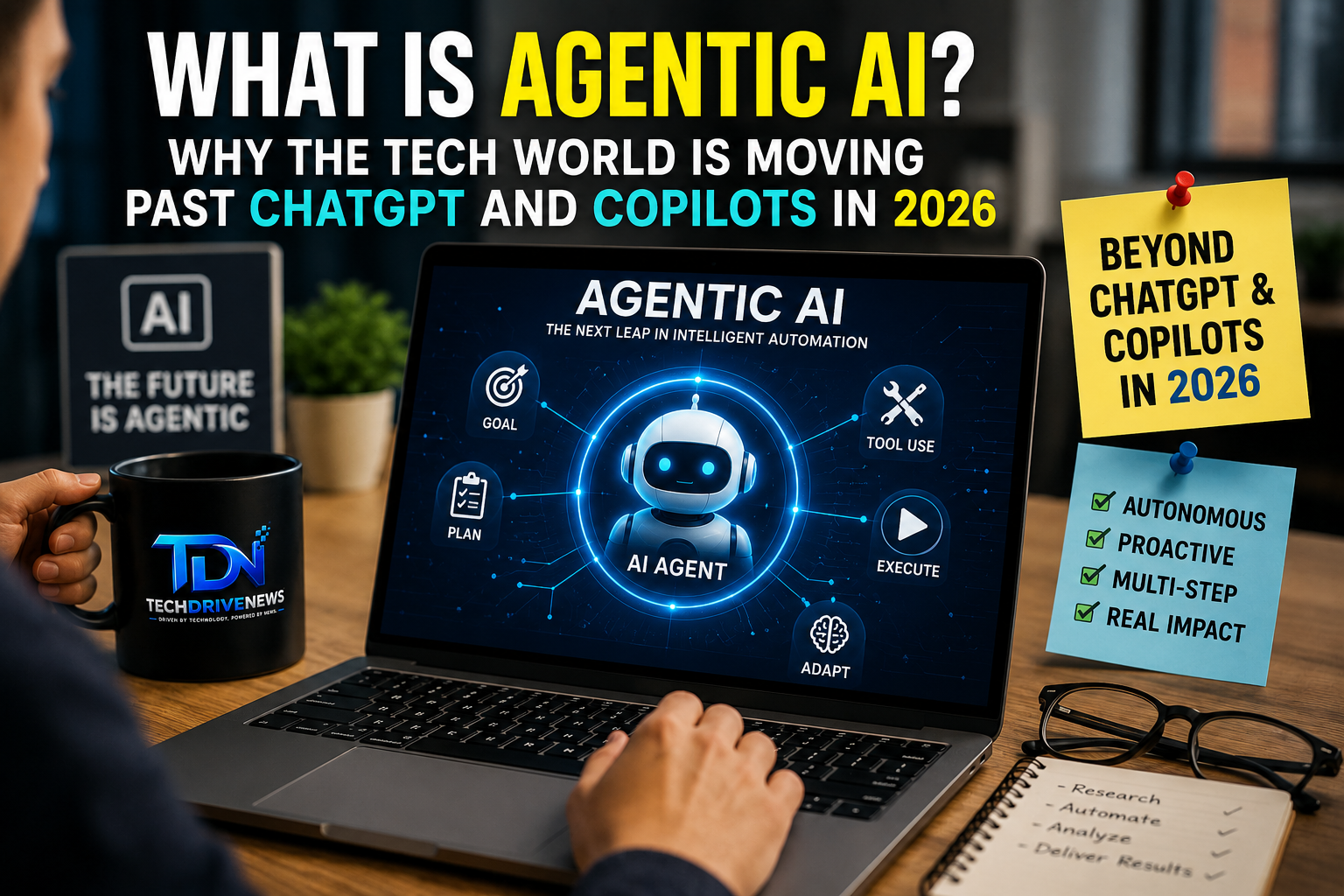
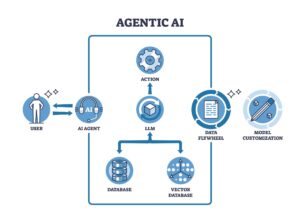
Agentic AI refers to artificial intelligence systems that possess agency—the autonomous ability to think, plan, use digital tools, and execute multi-step workflows to achieve a high-level goal, entirely without a human needing to guide them at every single turn.
Instead of writing five separate prompts to get a single job done, you give an AI agent a broad objective: “Research our top three competitors’ pricing changes this week, compile a formatted spreadsheet, and draft an email briefing for the executive team.” The agent handles the rest, reasoning through errors and adapting along the way.
Chatbots vs. Agents: Spotting the Key Differences
To understand why the software world is shifting so aggressively toward autonomous architecture, look at how the workflow changes:
| Capability | Generative AI / Copilots | Agentic AI |
| Execution | Passive: Reactive; only responds directly to a localized prompt. | Proactive: Active; can initiate actions based on a broader target objective. |
| Workflow Length | Single-turn: One prompt equals one static response. | Multi-step: Breaks down complex tasks into an unfolding sequence of actions. |
| Tool Usage | Limited: Can search the web or write a code snippet if asked. | Advanced: Can log into software, interact with APIs, send emails, and modify databases. |
| Self-Correction | None: If it hallucinates or hits an error, it halts until you correct it manually. | High: Iterates, tests its own code/output, and dynamically fixes bugs. |
The Leading Agentic AI Tools of 2026
The shift toward Agentic AI isn’t just conceptual—it is powered by an entirely new software stack. If you want to build or deploy AI agents today, these are the tools dominating the industry:
-
Developer Frameworks (Code-First)
For software engineers and tech-heavy enterprises, these open-source frameworks are the building blocks used to script agent behaviors:
- LangGraph: Created by the LangChain team, this is the gold standard for complex, production-ready workflows. It allows developers to map out agents in “graphs” with loops, memory, and checkpoints for human approval.
- CrewAI: The most popular tool for building multi-agent teams. It uses a clean, role-based setup—allowing you to explicitly write out backstories and assign tasks to a digital “crew” (e.g., a Researcher Agent paired with a Writer Agent).
- PydanticAI: A major breakout framework this year for Python developers who prioritize strict data validation, preventing agents from passing malformed data into enterprise software.
-
No-Code & Enterprise Platforms (Ready-to-Use)
For businesses looking to launch automated digital workers without writing code, the industry has shifted to powerful visual ecosystems:
- Microsoft Copilot Studio: Deeply integrated into Microsoft 365, this allows teams to build low-code agents that natively navigate SharePoint, Teams, and corporate email.
- n8n & Relevance AI: Popular visual workflow builders. They allow users to connect drag-and-drop nodes to build multi-step agent loops that automatically handle customer data, CRM updates, and lead enrichment.
- Salesforce Agentforce: A massive enterprise platform heavily deployed this year, automating core customer service and sales pipeline tasks directly inside customer databases.
Real-World Enterprise Examples
Agentic workflows are no longer hypothetical frameworks—they are driving measurable ROI across major business sectors:
-
Finance & Automated Compliance
Global banking giants like JPMorgan Chase are testing advanced AI agents to handle intricate compliance and fraud detection. Instead of simply flagging an odd transaction for human review, an agent can autonomously lock a compromised account, look up historical customer data across separate databases, draft a personalized alert email, and schedule an emergency call with a human specialist.
-
Supply Chain & Autonomous Procurement
Manufacturing platforms are moving away from manual inventory entry. Advanced agents continuously monitor physical warehouse telemetry and supplier pricing APIs. When stock thresholds are breached, the agent runs optimization models, evaluates vendor pricing variations, selects the optimal vendor, and auto-generates a purchase order directly inside the company’s enterprise software without human intervention.
-
Healthcare & Insurance Claim Corrections
Revenue leakage in healthcare often stems from minor documentation errors causing insurance rejections. Medical administrative systems are now deploying agents that automatically scan denied claims, pinpoint the exact structural cause of the rejection, pull the missing patient data from Electronic Health Records (EHR), and resubmit corrected claims to the insurance carrier natively.
Why the Tech World is Moving Past the Chat Box
The transition away from basic text inputs isn’t just a trend; it is a necessity driven by three core factors:
-
Eliminating “Prompt Fatigue”
While platforms like ChatGPT are incredibly capable, they still require a human to sit in front of a keyboard, figure out the perfect phrasing, evaluate the output, copy-paste it into another piece of software, and prompt it again. Humans have essentially become the manual “glue” connecting separate software applications. Agentic AI removes the middleman from mundane workflows, letting humans focus on strategic review.
-
The Rise of “Multi-Agent” Ecosystems
Modern tech architecture is moving toward coordinated multi-agent teams. Instead of one massive, generalized model trying to solve every problem, specialized agents talk directly to each other. For example, an Analyst Agent gathers raw telemetry data, passes it to a Writer Agent to create an executive report, which then passes it to a Compliance Agent to check for regulatory boundaries—all running quietly in the background while the user is away from their desk.
-
Real-World Integration & Dynamic Tool Use
Early conversational AI was confined entirely to a locked text sandbox. Today’s AI agents have digital hands. Powered by frameworks like CrewAI, LangGraph, and Microsoft Copilot Studio, agents can safely authenticate through secure enterprise portals, navigate cloud infrastructure, and manage software engineering pipelines.
The Tech Drive News Reality Check: We are not abandoning conversational chat boxes entirely; they are simply evolving. The text interfaces we used to write basic essays are turning into the command centers where professionals deploy, monitor, and audit their automated AI workforces.
The early years of the AI boom were about teaching machines how to write and speak. The current era is about teaching AI how to act.
TechDriveNews Editorial Team covers gaming news, redeem codes, software updates, AI tools, and consumer technology. Our editorial team researches information using official announcements, developer websites, and other trusted public sources. Articles are regularly reviewed and updated as new information becomes available to help readers access accurate, timely, and reliable content.