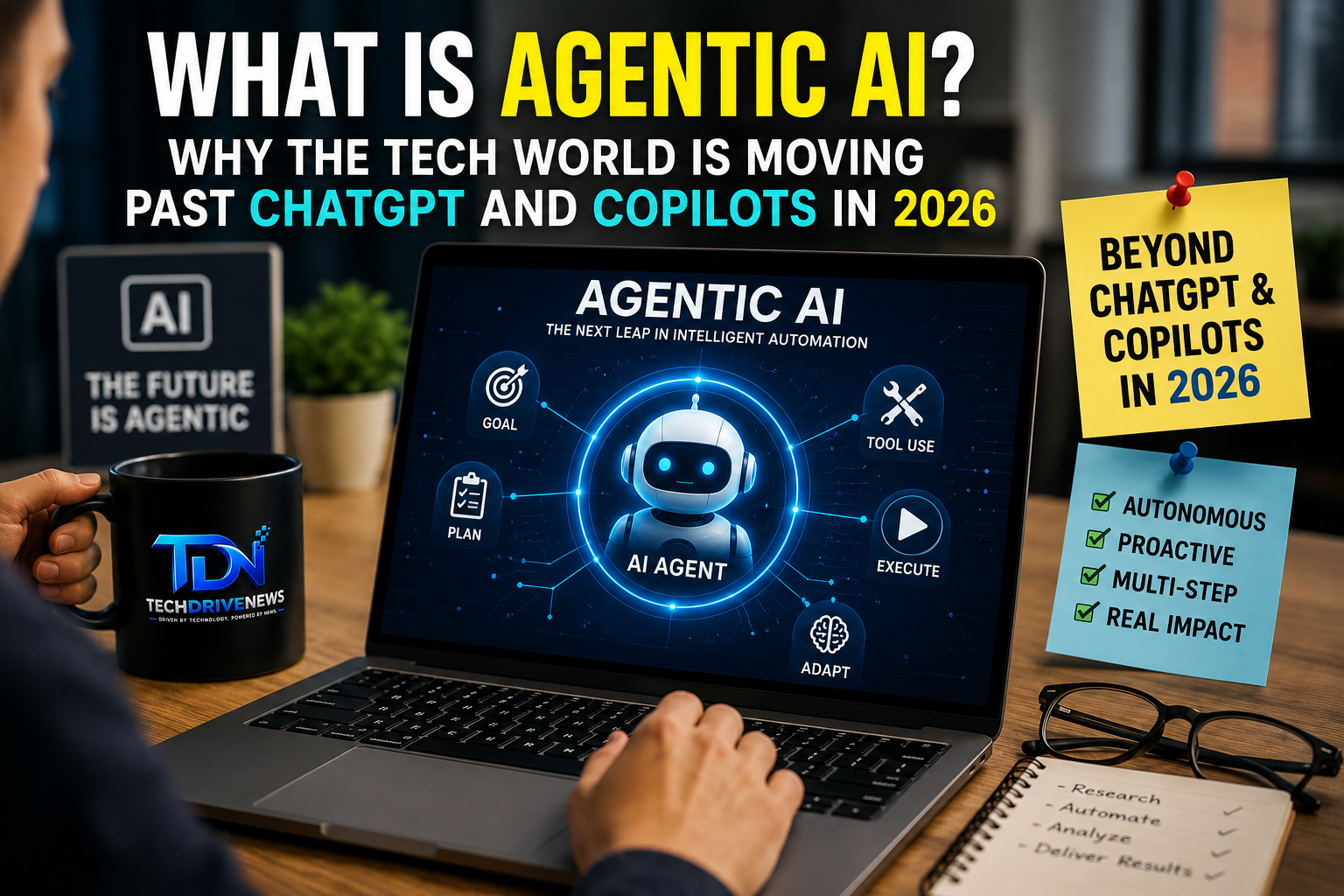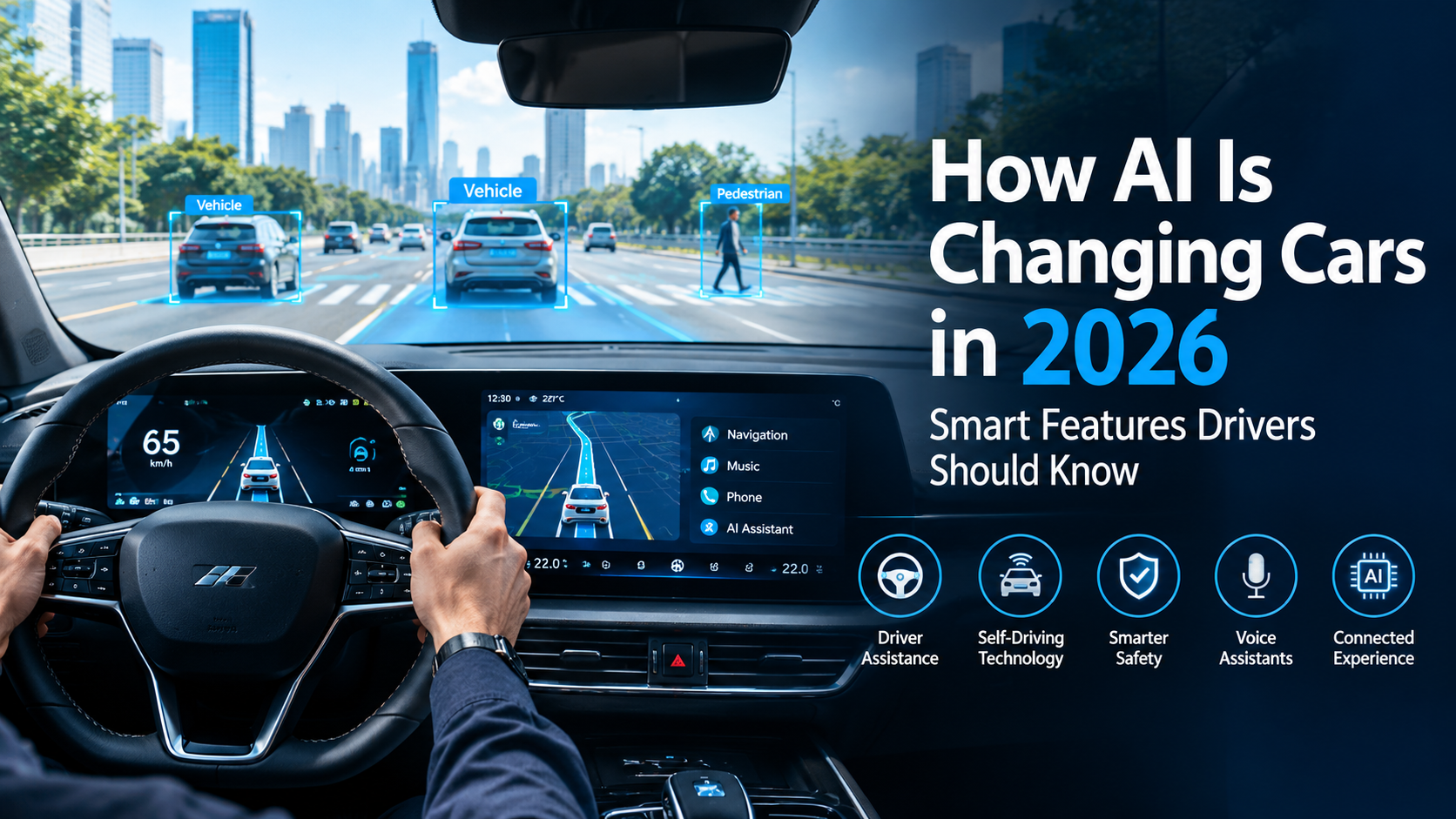
Artificial intelligence is becoming an essential pillar of modern automotive technology. In 2026, many vehicles rely on AI-assisted systems to help drivers park, detect potential hazards, navigate complex traffic, monitor driver attention, and elevate the in-car experience. To understand how these intelligent workflows operate behind the scenes, read about what Agentic AI is and how autonomous decision-making systems process real-time requests.
AI is also actively influencing electric vehicle (EV) battery management, voice assistants, predictive maintenance, and connected-car services. However, capabilities vary significantly across vehicles, and advanced driver assistance systems (ADAS) do not make a car fully autonomous.
In this comprehensive guide, we explore the most useful AI-powered car features, explain how they work, examine official manufacturer implementations, and detail what drivers—especially those in India—should evaluate before purchasing an AI-equipped vehicle.
1. AI-Powered Driver Assistance and Safety
Modern vehicles use an array of cameras, radar, ultrasonic sensors, and intelligent software to identify vehicles, pedestrians, lane markings, and roadside obstacles.
Depending on the vehicle model and trim level, driver assistance features may include:
-
Automatic Emergency Braking (AEB)
-
Adaptive Cruise Control (ACC)
-
Lane Departure Warnings & Lane-Keeping Assistance
-
Blind-Spot Monitoring
-
Traffic Sign Recognition
These technologies assist drivers in responding to sudden road hazards. However, system performance remains strictly dependent on clear road conditions, visibility (e.g., heavy rain or fog), sensor quality, and underlying software limitations.
2. Smarter Parking Assistance
Parking technology has evolved beyond basic proximity sensors into camera-driven automated steering functions.
AI-assisted parking features scan surrounding environments to identify suitable parallel or perpendicular spaces, direct steering inputs, or execute full parking maneuvers autonomously. While these tools reduce friction in crowded urban spaces, drivers must remain fully attentive, keep their hands ready, and follow the vehicle screen prompts throughout the process.
3. AI Voice Assistants and Smart Infotainment
Traditional vehicle voice controls required strict, predefined commands. Today’s automotive market is shifting toward natural, conversational AI assistants powered by Large Language Models (LLMs). Drivers can speak naturally to:
-
Find destinations or discover complex routes.
-
Adjust cabin climate controls hands-free.
-
Control audio playback across supported streaming services.
-
Draft or translate text messages without picking up a phone.
-
Ask open-ended conversational questions using generative AI models.
If you are curious about the underlying AI models powering these tools, check out our guide on Google Flow AI: features, plans, and beginner usage.
Industry Implementations (2026 Announcements)
-
BMW: Unveiled its enhanced Intelligent Personal Assistant integrated with Amazon Alexa+ on the fully electric BMW iX3. Designed to understand natural dialogue and multi-part queries, its initial rollout is focused on Germany and the United States.
-
Mercedes-Benz: Uses its AI-powered MBUX Technology platform, incorporating LLMs for natural hands-free interactions and contextual controls.
-
Volvo: Officially announced the deployment of Google Gemini across eligible Volvo models, enabling conversational route planning and travel assistance, starting with U.S. vehicle rollouts.
-
General Motors: Announced a rollout of Google Gemini via GM News for eligible 2022+ vehicles equipped with Google built-in, enabling multi-step travel stops and hands-free text summarization.
Note: Voice feature availability depends heavily on active cellular connectivity, language support, hardware compatibility, and manufacturer software subscriptions.
4. Predictive Maintenance and Vehicle Diagnostics
AI algorithms analyze high-frequency data from onboard sensors to monitor mechanical health continuously.
Common applications include:
-
Tracking EV battery cell degradation or thermal anomalies.
-
Detecting abnormal engine vibration or operating patterns.
-
Sending proactive maintenance alerts before a component fails.
Crucial Caveat: Predictive diagnostics serve as an early warning system; they do not replace scheduled periodic servicing or a hands-on mechanical inspection by a trained technician.
5. AI in Electric Cars and Battery Management
For electric vehicles (EVs), intelligent software optimizes power consumption and charging protocols:
-
Thermal Management: Pre-conditions battery temperature based on upcoming fast-charging stops.
-
Range Estimation: Calculates remaining battery range by combining route topography, live weather data, cabin heating/cooling usage, and driving habits.
-
Smart Charging: Optimizes charge rates to protect long-term battery health under supported conditions.
While these tools improve trip planning, they do not eliminate range anxiety entirely or guarantee static battery lifespans.
6. Connected Cars and Personalized Driving
Modern connected vehicles exchange telemetry with cloud platforms, mobile apps, and navigation services:
-
Remote Control: Pre-condition cabin temperature, locate parked vehicles, or unlock doors via smartphone apps.
-
Personalization: AI systems automatically adjust seat positioning, climate preferences, and favorite media channels based on driver profiles.
Because these capabilities rely on active internet connectivity and cloud infrastructure, vehicle owners must carefully review data privacy policies, cybersecurity protections, and manufacturer service terms.
7. Autonomous Driving: What Can Cars Actually Do?
Autonomous technology is widely discussed, but public terminology can easily confuse buyers. It is vital to separate automated features into clear levels:
| Level Category | Operational Scope | Driver Responsibility |
| Driver Assistance (Level 1–2) | Assists with specific tasks like steering or speed control (e.g., lane centering, adaptive cruise). | Required. The driver must pay continuous attention and keep hands ready. |
| Conditional Automation (Level 3) | System manages driving tasks under specific operational limits (e.g., approved highways, traffic jams). | Shared. Driver must take over when requested by the vehicle. |
| Full Autonomy (Level 4–5) | Performs all driving tasks in defined conditions (L4) or all conditions (L5) without human intervention. | None. Not generally available in consumer passenger vehicles. |
-
Tesla Autopilot / FSD: For details on driver-assist systems, consult Tesla’s Official Autopilot Documentation. Driver assistance features—regardless of branding—do not permit drivers to disengage or treat a vehicle as fully self-driving. Always comply with local vehicle operation regulations.
8. How AI Affects Car Prices and Ownership Costs
Equipping vehicles with AI introduces distinct financial and operational trade-offs:
Potential Advantages
-
Improved active safety protection and driving convenience.
-
Optimized battery longevity and range management.
-
Proactive identification of vehicle faults before major failures occur.
Drawbacks & Hidden Costs
-
Higher initial vehicle purchasing costs or mandatory trim upgrades.
-
Recurring monthly or annual fees for software connectivity and premium AI features.
-
Expensive sensor replacement and calibration costs (radar/LiDAR/cameras) following minor collisions.
-
Ongoing privacy considerations regarding real-time location and telemetry logging.
9. What Indian Drivers Should Know
For drivers navigating Indian roads, AI-enabled driver assistance, blind-spot monitoring, and smart parking are valuable tools in congested urban centers and on major highways. However, specific regional factors influence system reliability:
-
Unpredictable Traffic & Infrastructure: Faded lane markings, unmapped speed breakers, or non-standard road layouts can cause ADAS features to disengage unexpected or give warnings.
-
Weather & Environment: Monsoon rain, heavy dust, and extreme heat can temporarily blind visual sensors and radar modules.
Buyer Checklist for India
-
Verify Variant Details: Confirm which exact ADAS or AI voice features are installed on your chosen variant, as features vary between trims.
-
Review Announced Capabilities: On August 15, 2026, Google Cloud and Mahindra announced an AI in-car experience featuring Gemini Enterprise for the updated BE 6 SPORTEQ series via Mahindra’s MAIA platform. Always verify feature availability on the specific production variant before buying.
-
Conduct Safe Test Drives: Evaluate driver assistance systems under real-world traffic conditions in your local area.
-
Check Connectivity Requirements: Confirm whether voice or navigation features require an active eSIM subscription or a mobile hotspot.
-
Inspect Repair & Insurance Terms: Understand the replacement costs for bumper-mounted sensors, windshield-mounted cameras, and sensor calibration coverage.
Frequently Asked Questions
1. How is AI used in cars in 2026?
AI powers driver assistance (ADAS), smart parking, conversational voice assistants, EV battery health management, predictive diagnostics, and connected navigation platforms.
2. Are AI-powered cars fully self-driving?
No. Ordinary consumer vehicles equipped with AI remain driver-assisted systems. Human drivers must remain fully attentive and responsible at all times.
3. Can AI make cars safer?
Active safety systems like automated emergency braking can reduce certain collision risks. However, they do not replace alert, attentive driving habits.
4. Do electric cars use AI?
Yes. Many electric vehicles use smart algorithms to estimate real-time range based on terrain and weather, manage thermal battery preconditioning, and optimize charging power.
5. Are AI car features available in India?
Yes. Several carmakers in India offer ADAS features, connected car platforms, and conversational voice interfaces. Feature availability depends on the car manufacturer, model, and trim level.
6. Are AI-powered cars more expensive to maintain?
Not always, but specialized repairs involving camera calibration, radar alignment, or ongoing cloud software subscriptions can increase ownership costs compared to traditional vehicles.

TechDriveNews Editorial Team covers gaming news, redeem codes, software updates, AI tools, and consumer technology. Our editorial team researches information using official announcements, developer websites, and other trusted public sources. Articles are regularly reviewed and updated as new information becomes available to help readers access accurate, timely, and reliable content.
Categories: